
Closure of the Laliki Tunnel from 28 July (PL)
From 28 July at 6:00 a.m. By 25 August at 6:00 am The Lalikai Tunnel (Poland, S1) will be completely closed. The General Directorate of Roads informs that the closure is planned, as part of roadworks and tunnel maintenance.
🚗 Detour routes:
-
For vehicles up to 15 tonnes:
Drivers should use the detour via the Laliki junction, DW943, the municipal road (former DK69), to the Rajcza junction. -
For vehicles over 15 tonnes:
For vehicles coming from Slovakia, it is recommended to turn around at the former Slovak border crossing in Zwardonyje or at the Rajcza junction.
For vehicles coming from Zywiec, you can turn around at the Milowka roundabout or at the Laliki junction. -
Coming from Bielsko-Biala:
It is recommended to use the “Bielsko-Biała Komorowice” junction and take the S52 road towards Cieszyn.
Recommendations for carriers
-
Plan your routes in advance and choose the right detours for the weight of your vehicle.
-
Additional delays and congestion in the surrounding areas are likely.
Follow traffic news and use FleetIntel maps for the most accurate routes.
General traffic restrictions in Europe: 25-28 July – what hauliers need to know
25-28 July 2025 Many European countries have traffic restrictions for trucks over 7.5 tonnes (starting from 3.5 tonnes in Austria and Switzerland). Here are the main times of the restrictions and the main roads.
Friday, 25-07-2025
🇮🇹 Italy: 16:00-22:00
🇨🇿 Czech Republic: 17:00-21:00
🇵🇱 Poland: 18:00-22:00
🇨🇭 Switzerland: 00:00-05:00, 22:00-24:00
Saturday, 26-07-2025
🇦🇹 Austria:
07:00-15:00 – A12 Inntal, A13 Brenner, A14 Rheintal/Walgau, A13 from the Italian border to the Nößlach junction (if Innsbruck is the destination)
08:00-15:00 – A4 (Schwechat-Nickelsdorf, both directions)
08:00-15:00 – B178 Loferer Straße (Lofer-Wörgl)
08:08:00-15:00 – B320 Ennstalstraße (from 4.5 km)
08:00-15:00 – B177 Seefelder Straße
08:00-15:00 – B179 Fernpassstraße (Nassereith-Biberwier)
08:00-15:00 – B181 Achensee Straße
08:00-15:00 – B182 Brenner Road
15:00-24:00 – nationwide
🇩🇪 Germany: 07:00-20:00 (additional summer restrictions on some sections, see.
🇫🇷 France: 07:00-19:00
🇭🇺 Hungary: 15:00-24:00
🇮🇹 Italy: 08:00-16:00
🇸🇰 Slovakia: 07:00-19:00
🇸🇮 Slovenia: 08:00-13:00
🇨🇿 Czech Republic: 07:00-13:00
🇵🇱 Poland: 08:00-14:00
🇨🇭 Switzerland: 00:00-05:00, 22:00-24:00
🇱🇺 Luxembourg: 21:30-24:00
Sunday, 27-07-2025
🇦🇹 Austria: 00:00-22:00
🇩🇪 Germany: 00:00-22:00
🇫🇷 France: 00:00-22:00
🇭🇺 Hungary: 00:00-22:00
🇮🇹 Italy: 07:00-22:00
🇸🇰 Slovakia: 00:00-22:00
🇸🇮 Slovenia: 08:00-22:00
🇨🇿 Czech Republic: 13:00-22:00
🇵🇱 Poland: 08:00-22:00
🇨🇭 Switzerland: 00:00-24:00
🇱🇺 Luxembourg: 00:00-21:45
🇷🇴 Romania
DN1 (Otopeni-Ploiești-Brașov):
Monday-Thursday: 06:00-22:00
Friday, Saturday, Sunday: 00:00-24:00
DN1 (Ploiești-Brașov, via DJ236):
Monday-Thursday: 06:00-22:00
Friday, Saturday: 00:00-01:00, 05:00-24:00
Sunday: 00:00-24:00
A2 (Bucharest-Constanta):
25.07.: 12:00-22:00
26.07.: 06:00-22:00
27.07.: 06:00-22:00
28.07.: 12:00-22:00
DN7 (Pitesti-Vestem):
25.07.: 18:00-22:00
26.07., 27.07.: 06:00-22:00
DN39 (Agigea-Mangalia):
25.07.-27.07.: 06:00-22:00
DN22C (Murfatlar-Cernavodă):
27.07.: 06:00-22:00
Public holidays:
🇪🇸 25.07.2025 (Friday): Spain (Madrid, Navarra, Basque Country, Galicia)
🇪🇸 28.07.2025 (Monday): Spain (Cantabria)
Recommendation for carriers:
Be sure to check restrictions and plan your logistics in advance. Unforeseen restrictions may lead to congestion or fines in some areas.
If the information is relevant, please share it with colleagues or partners! Always up-to-date restrictions and route analysis – FleetIntel AI.
Sustainable EU tourism: a new communication toolkit is available
Developing sustainable tourism in the EU: a new communication toolkit
Tourism is one of the most important economic sectors in the European Union, but its development must be orderly and sustainable. In this context, the EU has launched a new communication package to help all Member States and stakeholders promote sustainable tourism. This challenge is becoming increasingly urgent in order to reduce environmental impacts and ensure the long-term development of the sector.
What is sustainable tourism?
Sustainable tourism includes aspects such as responsible travel, environmental protection and involvement of local communities. This means that tourism must not only generate income, but also sustain the ecosystem and promote social justice. The EU’s new Communication Kit helps to highlight these principles and to integrate them into national policies and practices.
Key tools for the communication suite
- Information material: provides guidelines and recommendations on how to promote sustainable tourism in different regions.
- Training programmes: seminars and training for busy professionals and local communities.
- Communication tools: materials have been developed to inform the public and promote responsible travel.
Why is this important?
Sustainable tourism not only reduces negative environmental impacts, but also strengthens local economies and supports cultural diversity. This toolkit helps Member Countries to cooperate and exchange experiences to create a sustainable and long-lasting tourism model.
How to make it happen?
- Plan your actions: use the guidelines to develop an action plan for your region.
- Involve communities: actively participate in local community and stakeholder activities.
- Learn and share: take part in events and training organised by the EU.
The EU Communication Package is a great opportunity to promote sustainable tourism and ensure that the sector is sustainable for future generations. If you are involved or interested in tourism, we recommend that you take a closer look at this material and implement its recommendations.
Night closure of the E17 motorway in Belgium (22-23 July)
Temporary Closure of Laliki Tunnel on S1 Road Toward the Slovak Border
Due to roadworks, the Laliki Tunnel on the S1 route (Milówka–Zwardoń direction) will be closed from July 21, 2025 at 6:00 AM until August 18, 2025 at 6:00 AM.
Traffic changes:
- Passenger cars will be diverted via the local road through the center of Laliki.
- Trucks (commercial transport) will need to use alternative border crossing points.
Drivers are advised to follow temporary road signs, drive cautiously, and plan their routes in advance.
Tunnel location on the map:
Romania: Traffic Restrictions for Heavy Vehicles Due to Heatwave in 14 Counties on July 8
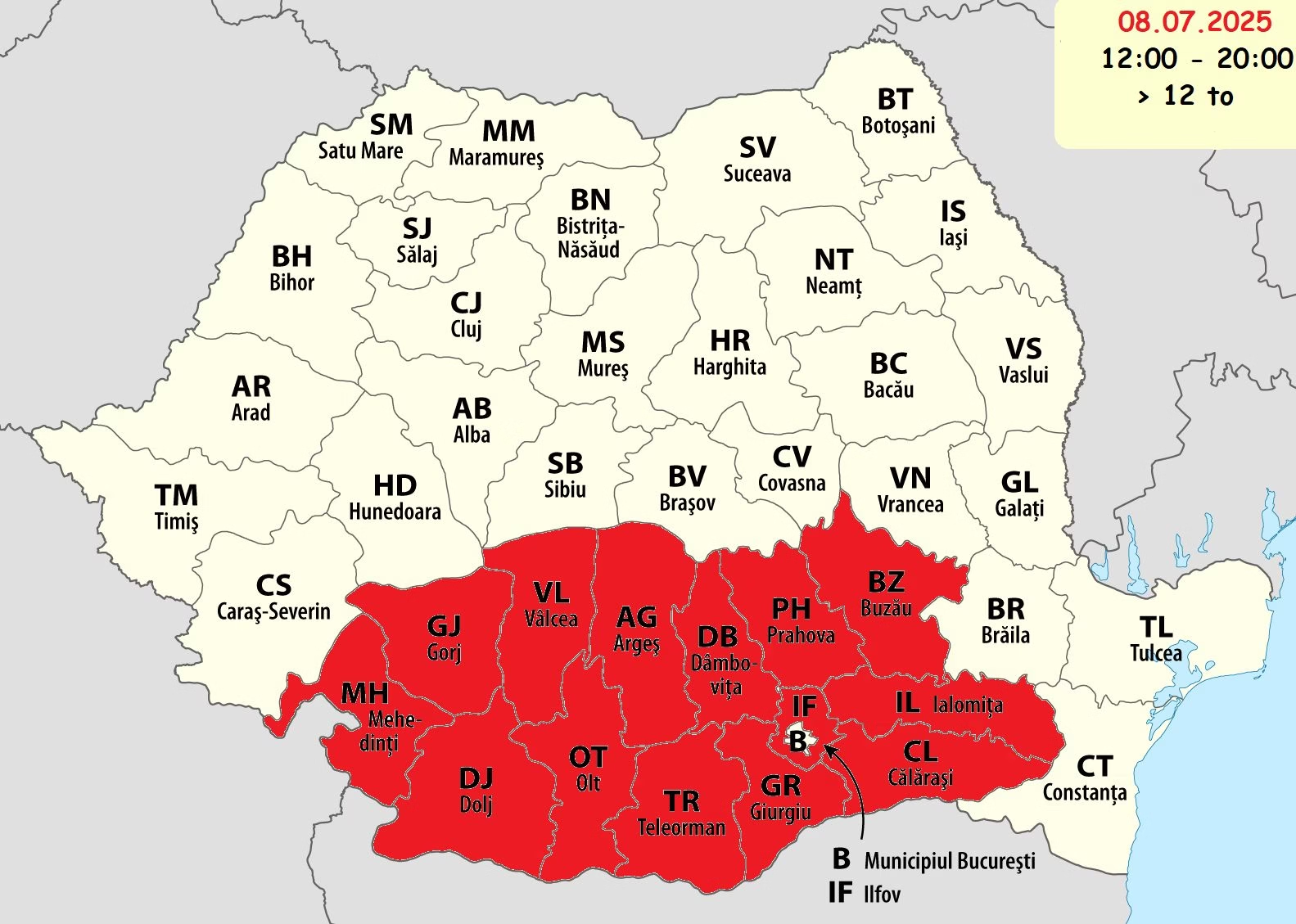 These restrictions are enforced by CNAIR (National Company for Road Infrastructure Administration) to protect road surfaces and ensure traffic safety during extreme heat conditions. The official announcement can be found here:
July 8: Traffic Restrictions on A7 Motorway near Hamburg
On Tuesday, July 8, 2025, from 8:00 AM to 2:00 PM, roadworks will take place on the A7 motorway in Germany, between the HH-Heimfeld (Exit 32) and HH-Südwest (Exit 33) interchanges. The repairs involve fixing a damaged safety barrier following a recent traffic accident.
In the southbound direction toward Hanover (RiFa Süd/Hannover), the crash barrier was severely damaged and must be repaired immediately to restore traffic safety.
Key Information:
-
The main traffic lane will be closed from 08:00 to 14:00. Traffic will be diverted to two lanes around the work zone.
-
After emergency work is completed, the speed limit will be temporarily reduced to 80 km/h.
Drivers are advised to plan ahead, follow posted signage, and observe speed restrictions. Traffic congestion is expected, especially during peak morning hours.
EU invests €2.8 billion in 94 transport projects to promote sustainable and connected mobility across Europe
EU invests €2.8 billion in 94 transport projects to promote sustainable and connected mobility across Europe
The European Union is allocating €2.8 billion to 94 transport projects aimed at building a more sustainable and better-connected mobility system throughout Europe. These investments are part of the EU’s **Connecting Europe Facility (CEF)** programme, which seeks to promote sustainable transport and improve connectivity between European regions.
Main objectives of the projects
These projects focus on several key areas:
- Sustainable transport: A significant portion of the funding is allocated to the development of rail, maritime, and inland waterway infrastructure to reduce CO₂ emissions and support greener transportation.
- Connected mobility: The projects also aim to enhance transport networks, making it easier to travel between European countries and regions.
- Innovation: Investments encourage the deployment of new technologies, such as electric vehicle infrastructure and smart transport solutions.
Main investment areas
The funding will be distributed across various transport modes and regions:
- Railways: The largest share (approximately €1.6 billion) will go toward the modernization and expansion of rail networks, especially for closing critical infrastructure gaps.
- Maritime and inland waterways: Around €500 million will be dedicated to improving port and inland waterway infrastructure.
- Road transport: While rail remains the primary focus, part of the funding will support road infrastructure improvements, particularly for international corridors.
How will European citizens benefit?
These investments will directly impact the daily lives of EU citizens:
- Faster and more convenient travel: Modernized railways and improved infrastructure will make cross-border travel faster and more comfortable.
- Lower environmental impact: Sustainable transport solutions will help reduce pollution and promote greener lifestyles.
- New jobs: Project implementation will create thousands of new jobs in construction, engineering, and technology sectors.
What are the future plans?
The EU plans to continue investing in the transport sector to ensure Europe is ready for future challenges. These 94 projects are just the beginning – more funding is expected in the future to support sustainable and innovative transport initiatives.
For more information on these projects and their implementation, visit the EU transport website.
Poland to Impose Fines up to €3000 for Failure to Report the RMPD100 Form
From 1 November 2024 New requirements for international freight transport will apply in Poland from 1 November 2018 and for carriers from the European Union and EFTA countries from 1 January 2025. Failure to submit the RMPD100 form via the SENT system can result in a fine of up to €3,000.
This is particularly important for anyone making a journey through Poland, including transit, entry or exit.
What is the RMPD100 form?
The RMPD100 is a report on the transport of goods that must be submitted to the Polish electronic SENT system before entering the country. The system is designed to monitor cross-border freight movements and to fight against shadow activities.
This form has been mandatory since:
-
1 November 2024 for carriers from third countries (non-EU and non-EFTA),
-
1 January 2025 for all EU and EFTA hauliers carrying goods to or from third countries.
What are the penalties?
Failure to submit the RMPD100 form or submitting it with errors is subject to severe penalties:
-
PLN 12 000 (about €3 000) – if the form is not submitted at all,
-
PLN 2,000 – for incorrect or incomplete information,
-
PLN 1 500 – if the form is not submitted on time.
It is important to note that unreported transport may be considered unauthorised. In this case, both the goods and the vehicle may be detained and the transport may be interrupted.
Who has to report?
The RMPD100 form is required whenever the vehicle:
-
transit through Poland,
-
transport goods to or from third countries (e.g. Ukraine, Belarus)
-
cabotage on Polish territory.
This also applies to empty journeys if the carrier is not a registered entity in the EU or EFTA countries.
How to submit the RMPD100 properly?
-
Register on the PUESC platform(https://puesc.gov.pl).
-
Before entering Poland, fill in the RMPD100 form with all the information you need: carrier, driver, route, vehicle, load.
-
After confirmation, provide the form number or QR code to the driver.
-
If necessary, produce the document at roadside checks.
Important: The form is valid for 10 days after registration.
What should hauliers do?
-
Make sure all company and driver information is registered in the PUESC system.
-
Report each journey in time before entering Poland.
-
Regularly update your knowledge of developments in the SENT system and control practices.
-
Drivers must carry the endorsement with them or be prepared to show it to officials.
Summary
The RMPD100 form is not a formality, but a mandatory document, without which a shipment through Poland may be considered illegal. Failure to report could lead to heavy financial penalties and suspension of activities. To avoid unforeseen losses, hauliers need to pay attention to correct and timely declarations in SENT.
For more information, visit the official website: puesc.gov.pl